
microphone
Item

Title
microphone
Description
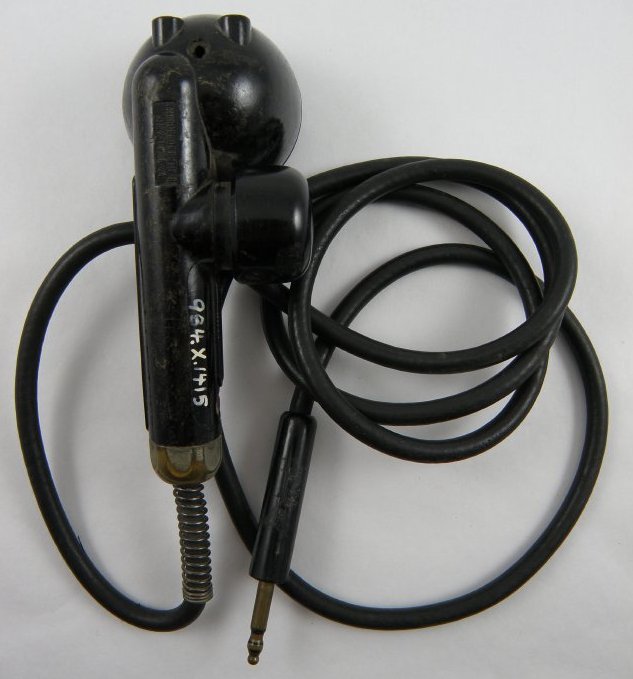
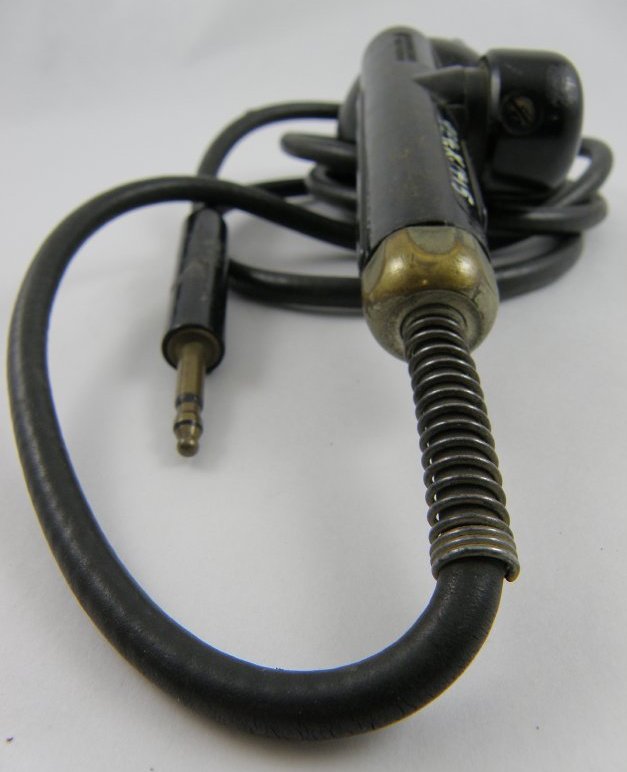
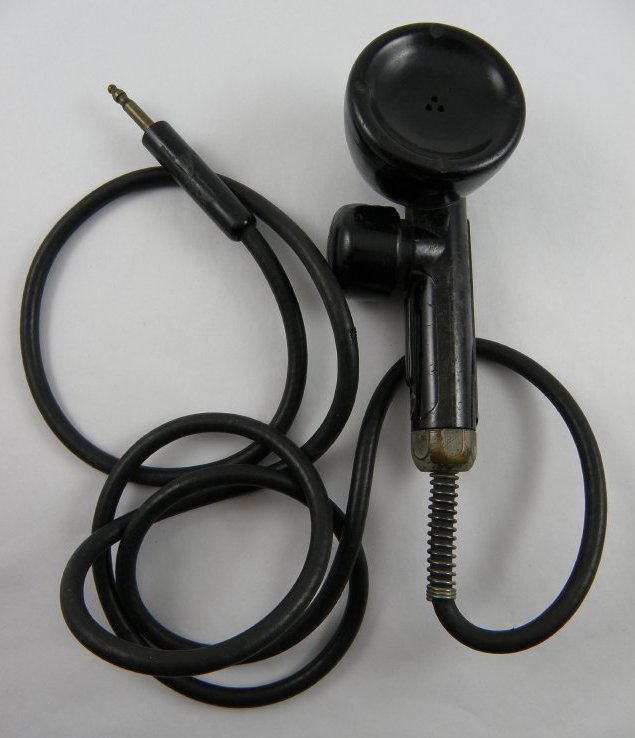
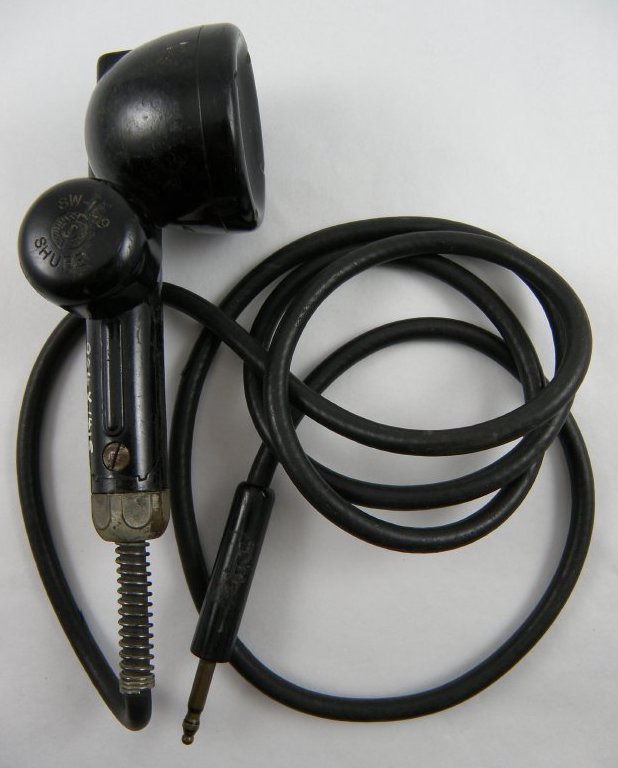
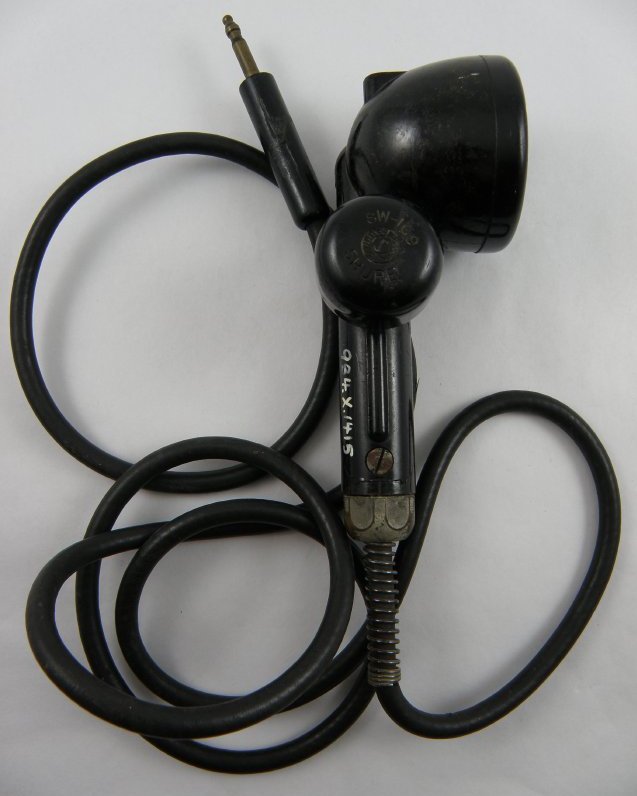
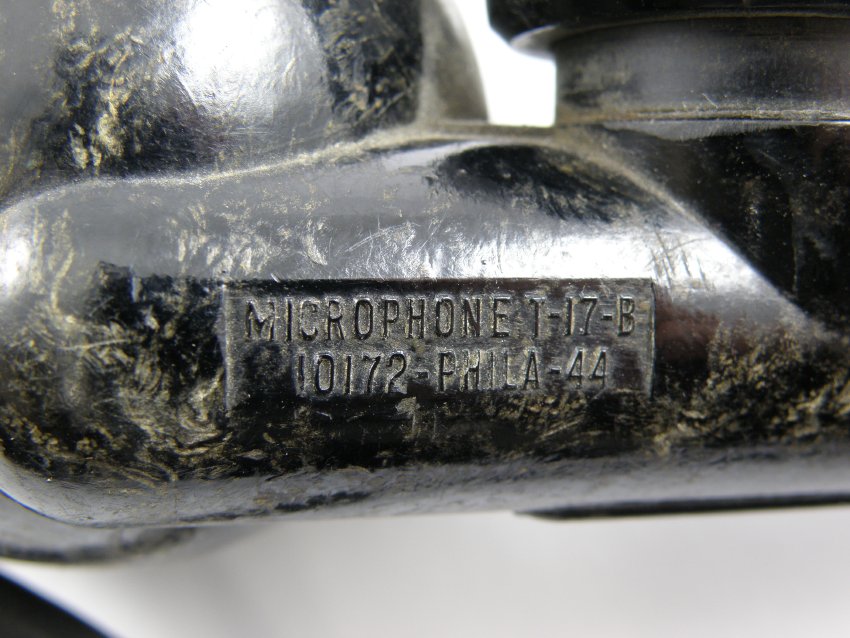
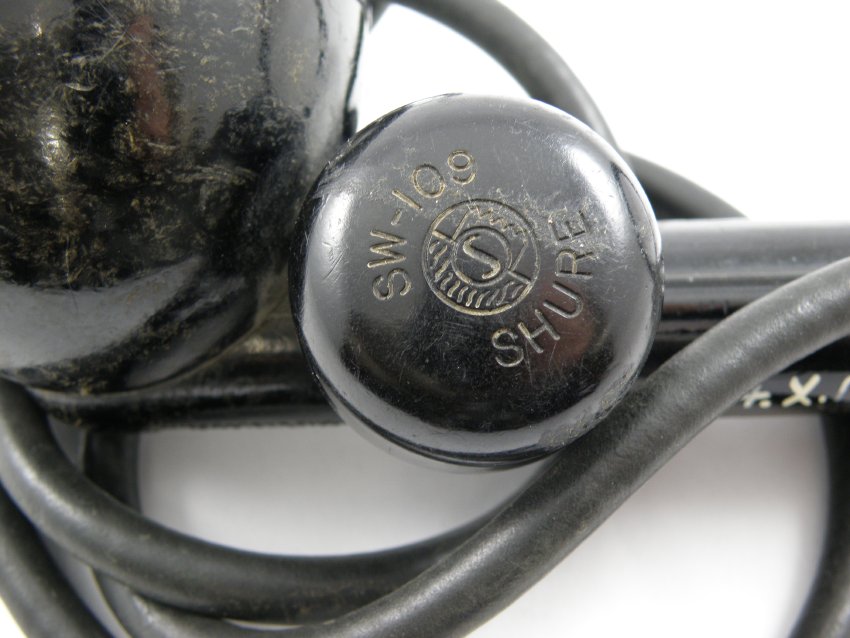
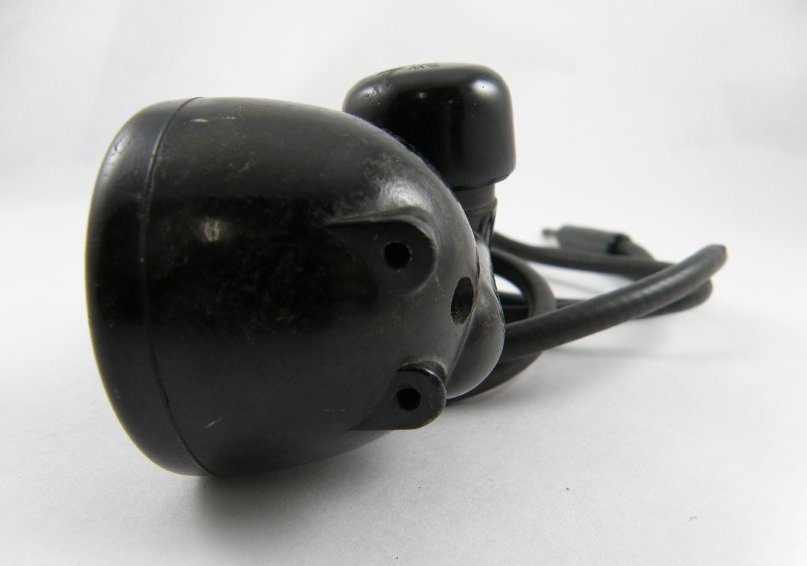
Hand Held Microphone T-17-B, 10172-PHILA-44. Black and muted gold flake finish with a push to talk button function stamped, SW-109 SHURE in the centre of it. The 50 inch black rubber communication cord has a black PL 68 plug attached on the end, and the other end has a 2 inch protective metal spring covering and is attached to the bottom of the microphone.
Identifier
984.x.1415
Format
Provenance
When air mail was introduced to the Canadian public in 1927, the Royal Canadian Corps of Signals was given responsibility for a nationwide system of radio beacons, required to guide the mail planes. The Corps also supplied communications for the first transatlantic air mail from a radio station at Red Bay, Labrador, to mail ships at sea and aircraft of the RCAF. In 1934, most of these responsibilities were handed over to the Royal Canadian Air Force and became the responsibility of its Signal Service. Despite these civilian-type duties, the main effort of the Permanent Force Signal Corps in those days was to supervise the signal training program of the Non-Permanent Active Militia, forerunner of the present-day Reserve Force. In 1937 the Corps School moved to its newly constructed permanent home, Vimy Barracks, Kingston , Ontario. The previous home of the Corps had been a collection of "temporary" huts at Camp Borden, first occupied in 1922. The Second World War, with its unprecedented requirement for communications befitting large-scale mobile fighting, saw a tremendous increase in the size and scope of operations of the Royal Canadian Corps of Signals. Each of Canada's five fighting divisions was furnished with a divisional signal unit of nearly a thousand men. The Corps also supplied a regimental sized unit for each of the two Corps Headquarters, and another for Headquarters' First Canadian Army. Hundreds of trained signalmen served in base signal units and many more served in North Africa, Hong Kong, Australia, and Burma. The war also brought tremendous advances in equipment and in the techniques used in military communications. The Corps contributed significantly to the development of more effective and efficient communications equipment through the efforts of the Canadian Signals Research and Development Establishment, located on the outskirts of Ottawa. When mobilization came in 1939, Canada found itself well served by the foresight in the training of the force of part-time soldiers; the Non-Permanent Active Militia; by the small Permanent Force. The vast numbers of loyal Canadians who had made a hobby of military signalling, two nights a week, played a large part in the organization and manning of the huge Signals force of the Second World War. In the re-organized post-war Canadian Army, Signals played a dominant part in both the Reserve and Active Forces.
Abstract
Good