
Throat Microphone
Item
Title
Throat Microphone
Description
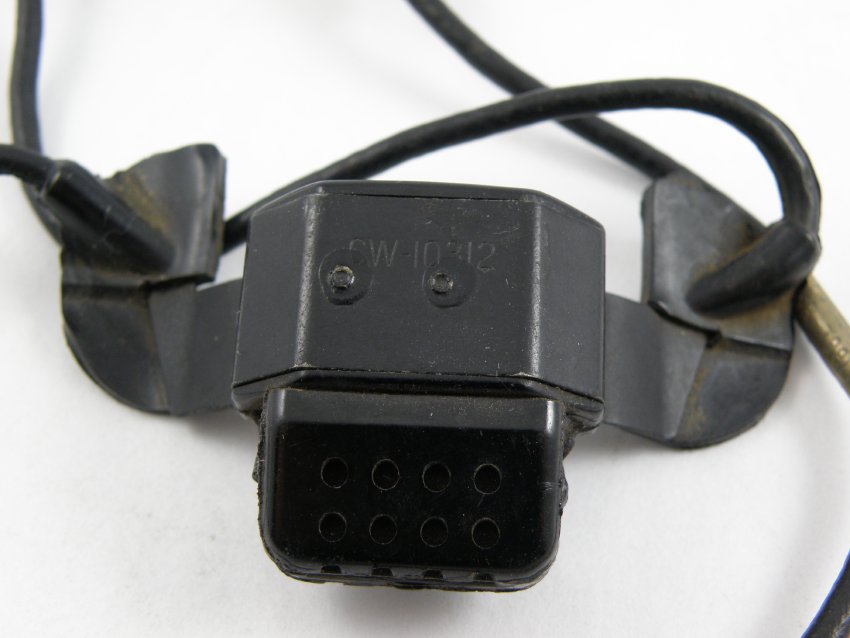
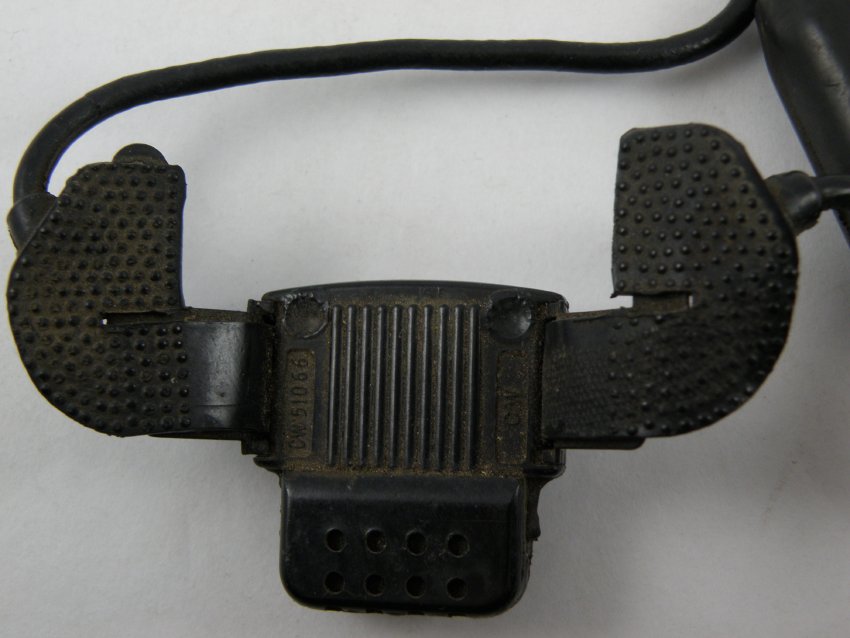
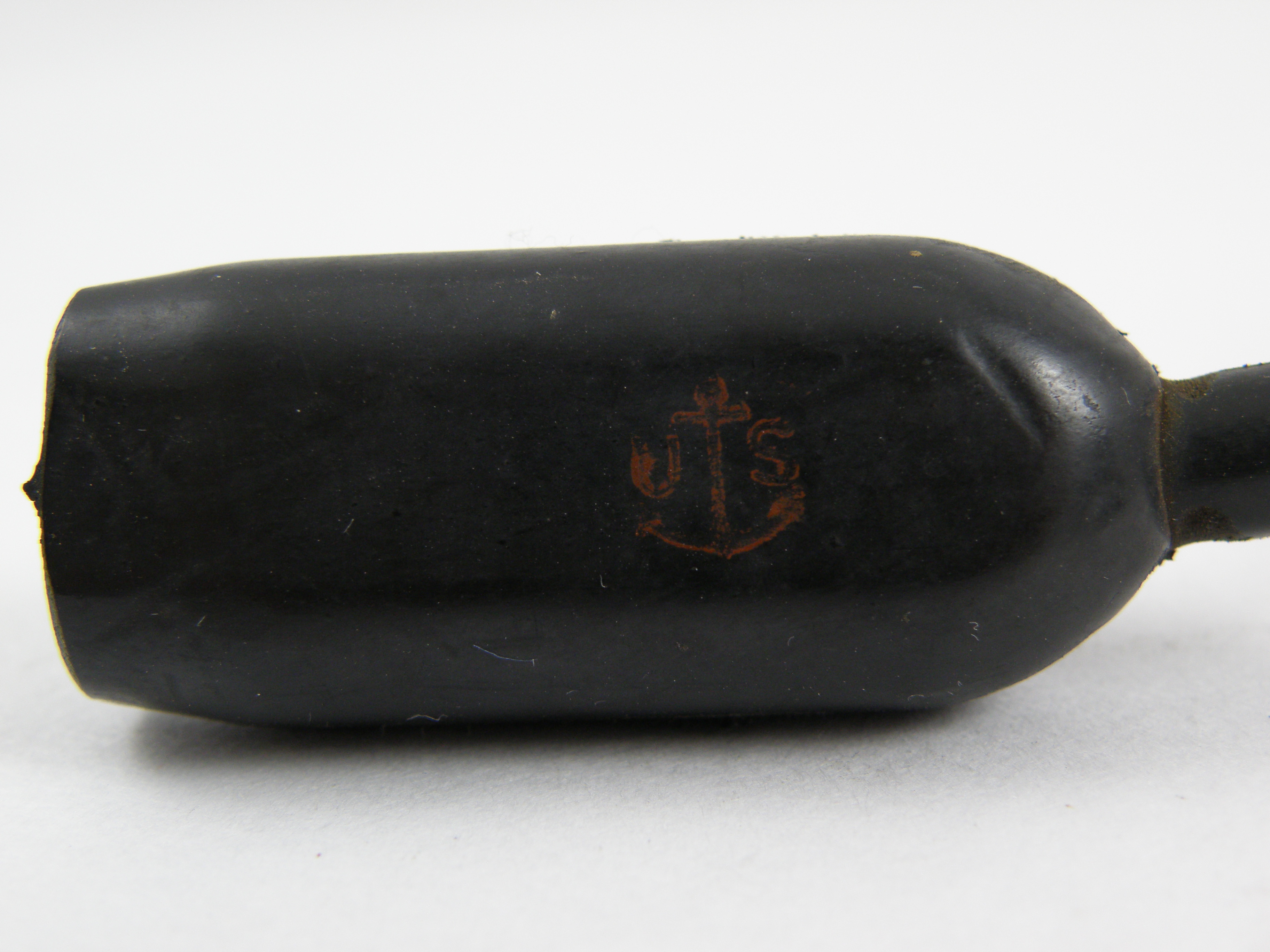
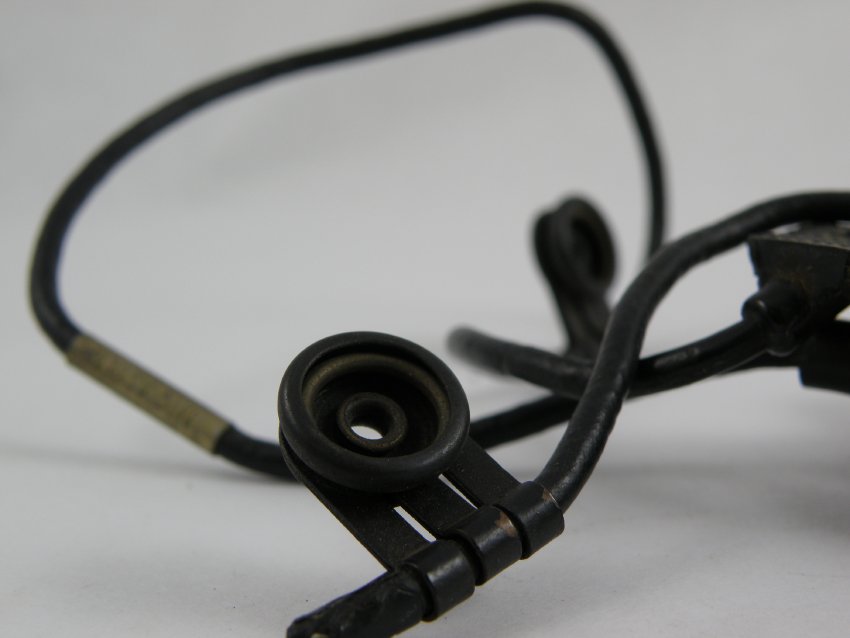
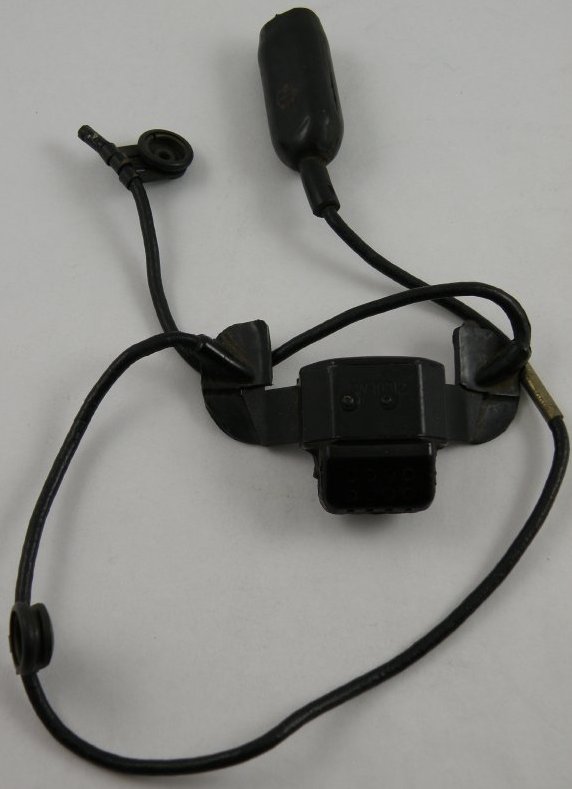
Throat Microphone Type CW-10312. Black bakelite microphone with a thin black plastic covered 13 inch communication cord attached to a black rubber plug bearing the U.S. Navy insignia, a red anchor with U.S on either side of it. Also attached to the cord are two black snaps and a metal band with CW 51071 MIC ASSEMBLY NXSR-73817
Identifier
995.053.003
Format
Provenance
Microphones were an essential part of WWII aircraft avionics, but the two basic microphones used today by military collectors and radio amateurs are typically more from the late 1930s and the early part of the war. Their hand-held operation was fine when all you had in front of you was a stick and a throttle, but the increasing needs of combat, not to mention the need for oxygen, drove the development of several "hands-free" variations. The earliest was the throat microphone, an infernal device that was later described by Bell Laboratories engineers as "a good idea but for the fact that the sound available from the larynx is basically unintelligible". Higher altitudes forced the use of oxygen masks and offered a much better solution for intelligibility through an integrated microphone element located in the mask. Because of their specialization (throat and oxygen masks are not the most user friendly) and impracticality. Furthermore, noise conditions may be encountered (e.g., air movement from an open window or door) for which the normal noise-canceling boom microphone was not designed to minimize. These problems surrounding boom microphones are not new. During World War II, acoustic microphones faced similar noise issues, signals were very noisy, and microphones were impractical for manual operations or for tasks requiring excessive head motion. Throat microphones were developed in response to these problems and used during the later years of WWII. Throat microphones are designed to pick up (transduce) the vibrations of the vocal apparatus at the throat instead of the vibrations of air molecules at the mouth. Since microphones convert sound signals (spoken words) into electrical signals to be transmitted into the communication system, boom microphones must necessarily also transmit any ambient noise around the talker’s mouth. Removing this ambient noise from the communication signal should improve the signal-to-noise ratio for the listener. Thus, by virtue of being relatively insensitive to airborne sound, throat microphones, as compared to boom microphones, should produce a signal that contains less noise.
Abstract
Good