
Stohwasser gaiter
Item
Title
Stohwasser gaiter
Description
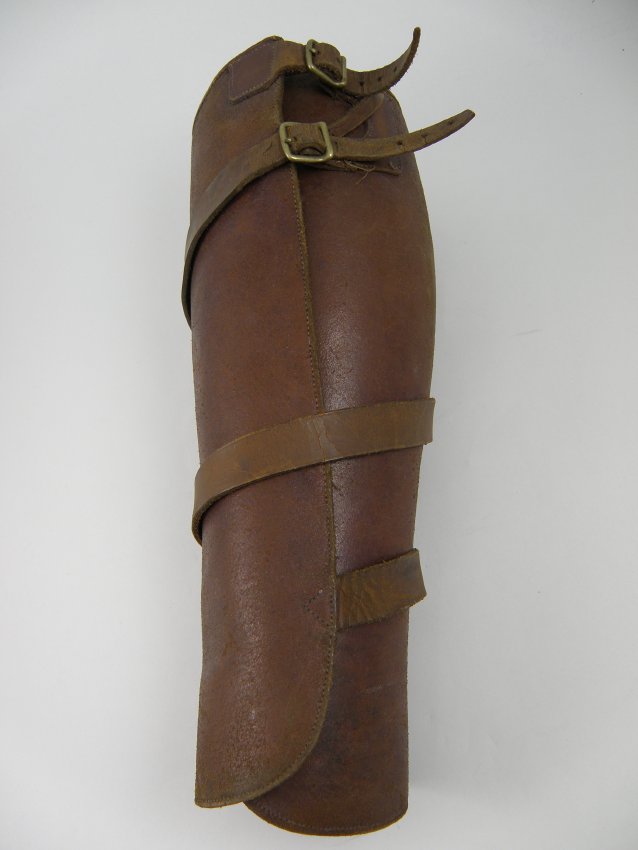
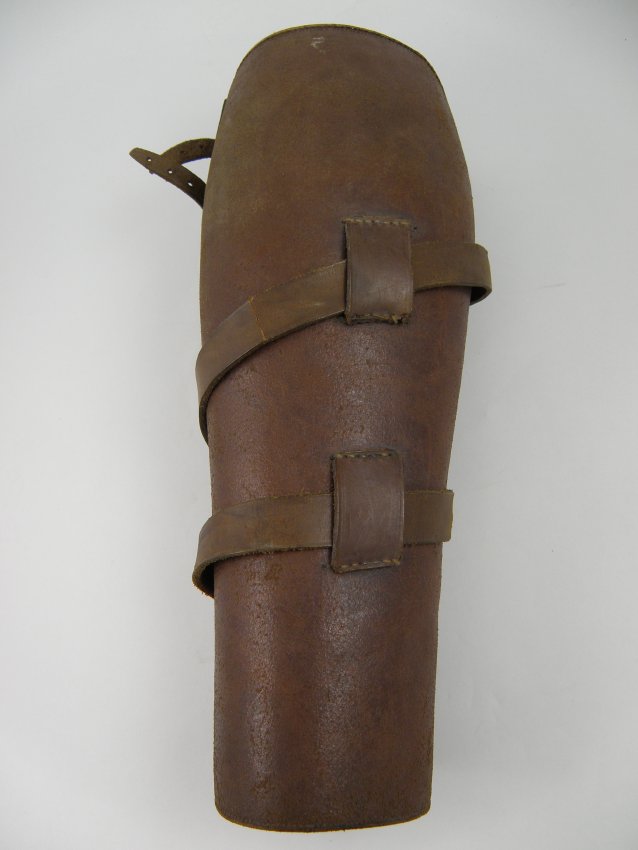
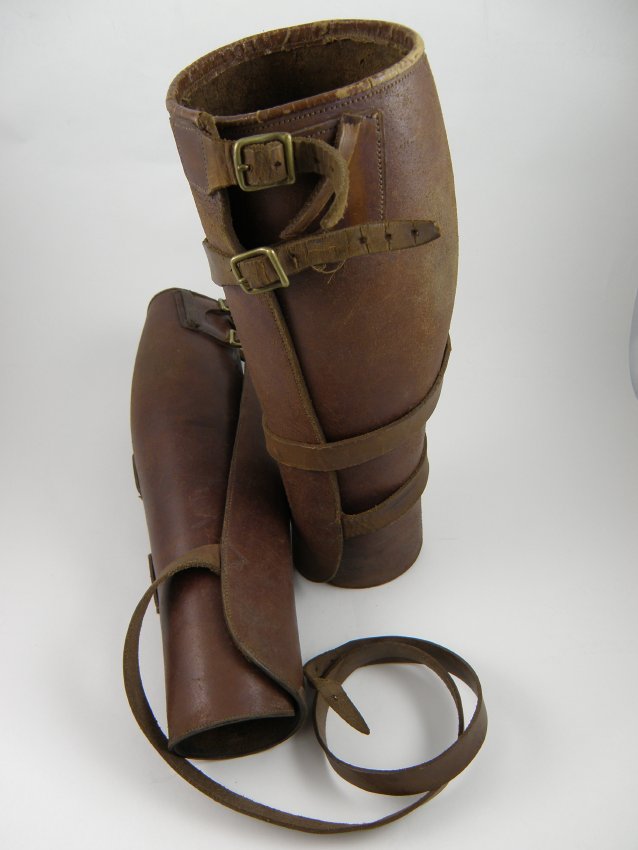
RIGID "CLAMSHELL" BROWN LEATHER STOHWASSER GAITER. This Chestnut brown leather leg protective covering when rolled out resembles a clam shell, wider at the top than at the bottom. Wrapped around the calf section of the leg, sewn at the top right side of the gaiter, is a single three inch strap secured to the upper brass twin buckle mountings with a single leather strap loop attached to the left upper edge of the gaiter. A second thirty-two inch strap is attached to the bottom edge of the gaiter which the wearer spirals upward and through two strap loops which are sewn vertically above one another and then secured to the lower twin brass buckle. The number "15' is stencilled in black on the interior surface of both gaiters.
Identifier
000.038.003
Format
Provenance
Since the late 1800s, soldiers of various nations, especially infantry, often wore leggings to protect their lower leg, keep dirt, sand, and mud from entering their shoes, and to provide a measure of ankle support. At first, these usually were puttees,strips of thick woolen cloth resembling a large bandage were wrapped around the leg to support the ankle. They were usually held in place by a strap attached to the cloth. Later, puttees were replaced by some armies with canvas leggings fastened with buckles or buttons, usually secured at the bottom with an adjustable stirrup that passed under the sole of the shoe, just in front of the heel. The soldier placed the leggings around his calf with the buttoned side facing out and adjusted them and the strap to achieve a proper fit. Leggings typically extended to mid-calf and had a garter strap to hold them up and were secured with a tie just below the knee. Military leggings only extended to the bottom of the knee and buttoned to the bottom button on the knee-breeches. Sometimes confused with "gaiters", with the difference being gaiters only extend to the high ankle and were worn with full leg trousers. During World War II, United States Army foot soldiers were referred to as legs by paratroopers and other U.S. forces that did not wear the the standard Army leggings issued with the field service shoe. Late in World War II, after experimenting with general issue of high-top combat boots and jump boots for their soldiers, leggings began to disappear from military service. In 1943, the United States Army modified their field service shoe by adding a taller leather upper that reached to the lower calf; secured by a combination of laces and buckles, the new design was designated the Type III Field Boot.
Abstract
Good
Date Created
c.1917