
Headset/oxygen mask
Item
Title
Headset/oxygen mask
Description
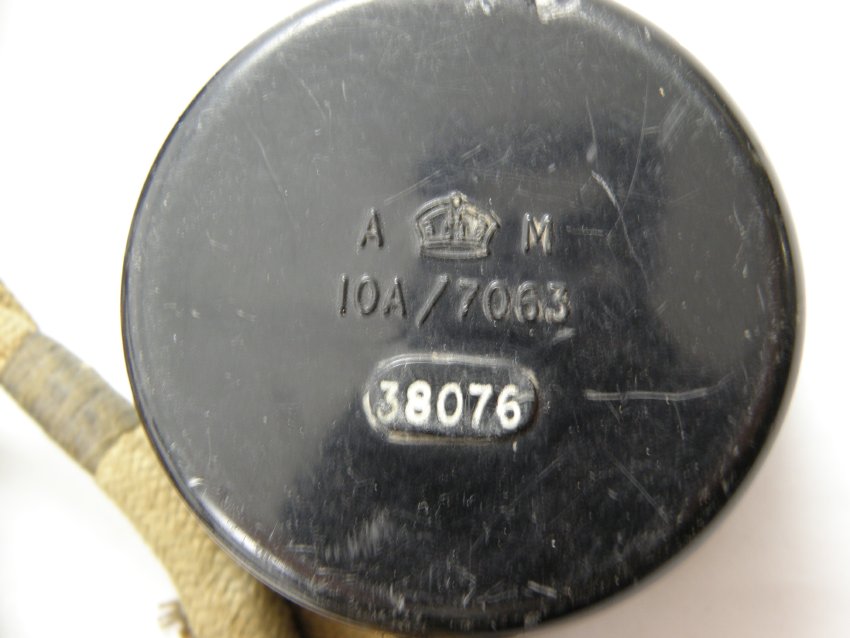
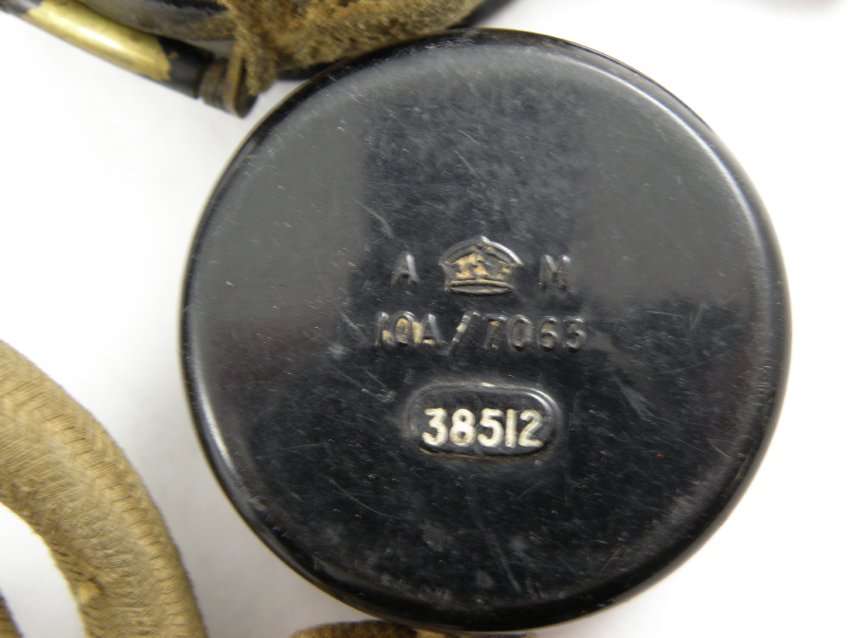
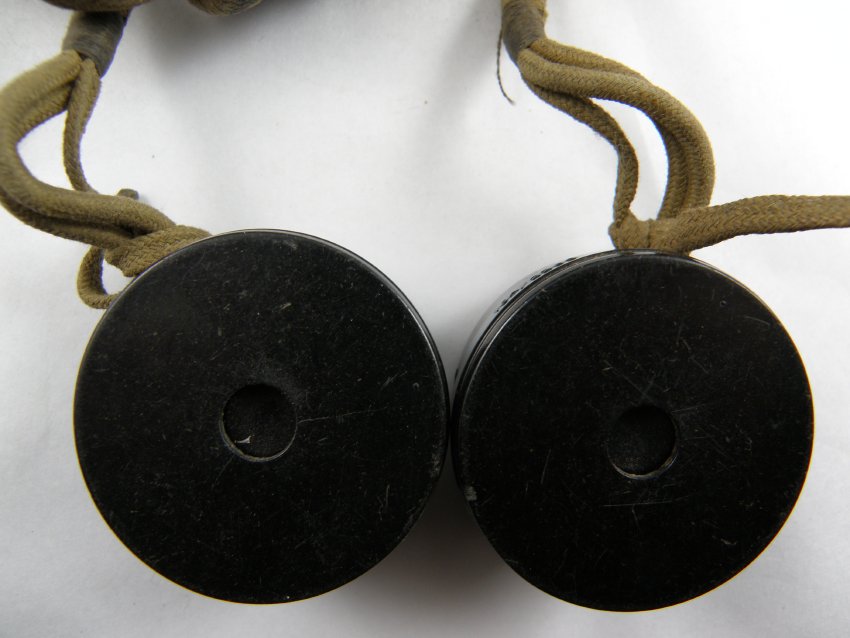
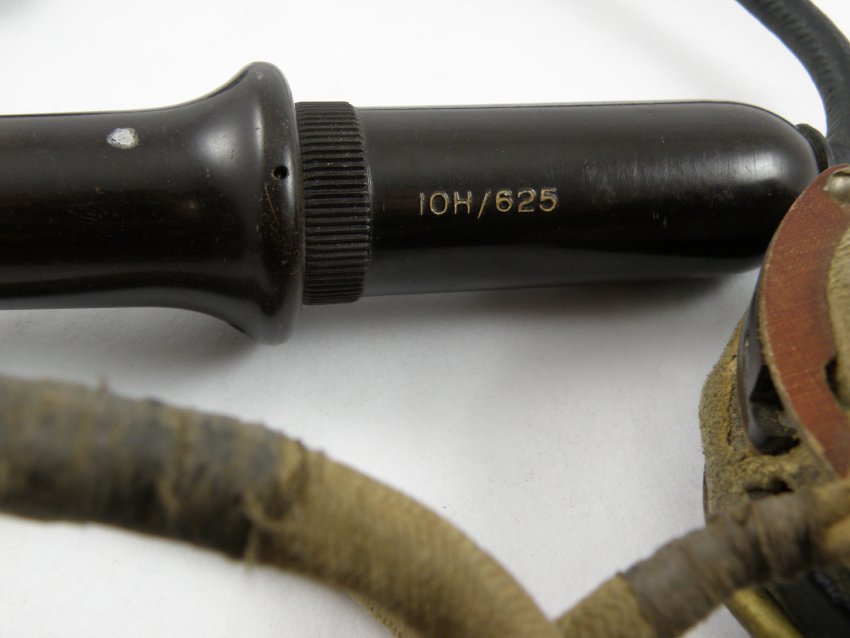
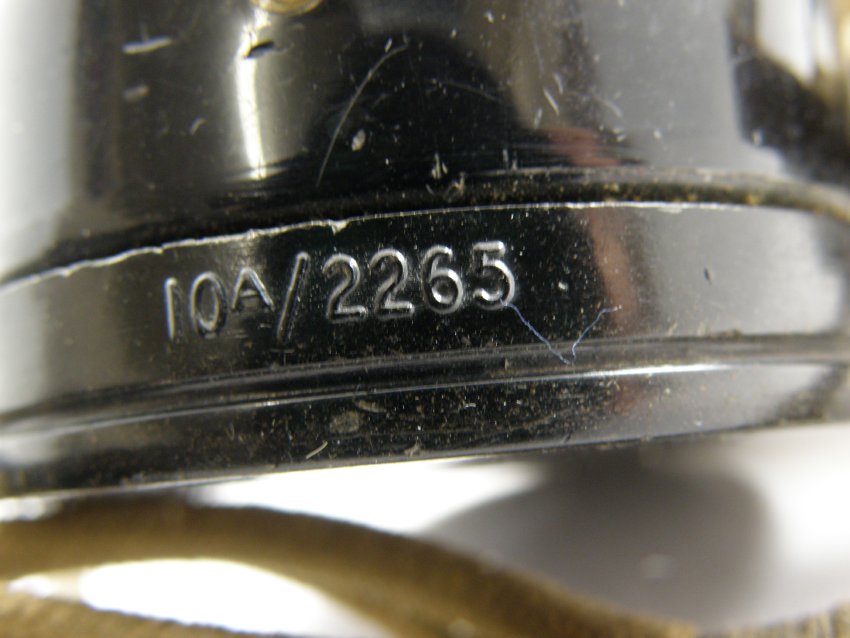
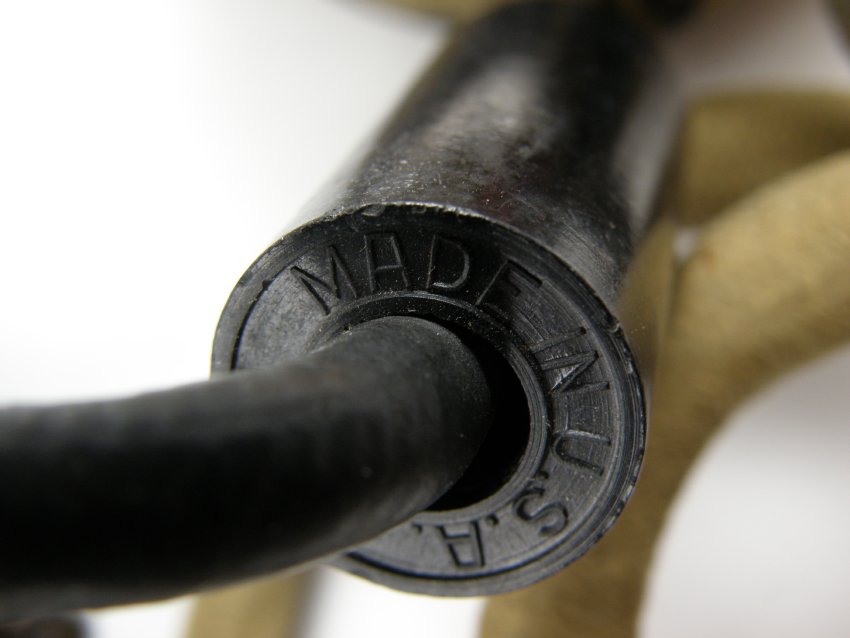
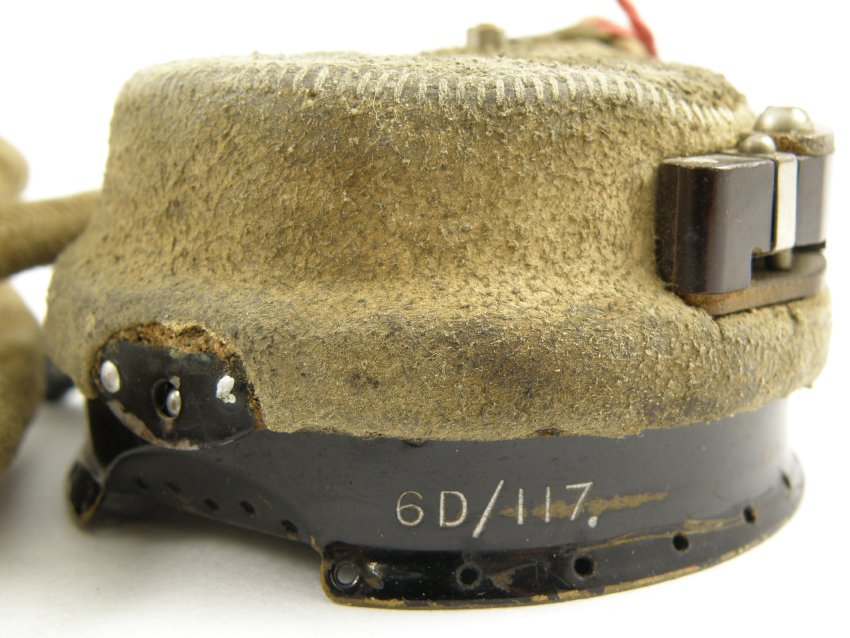
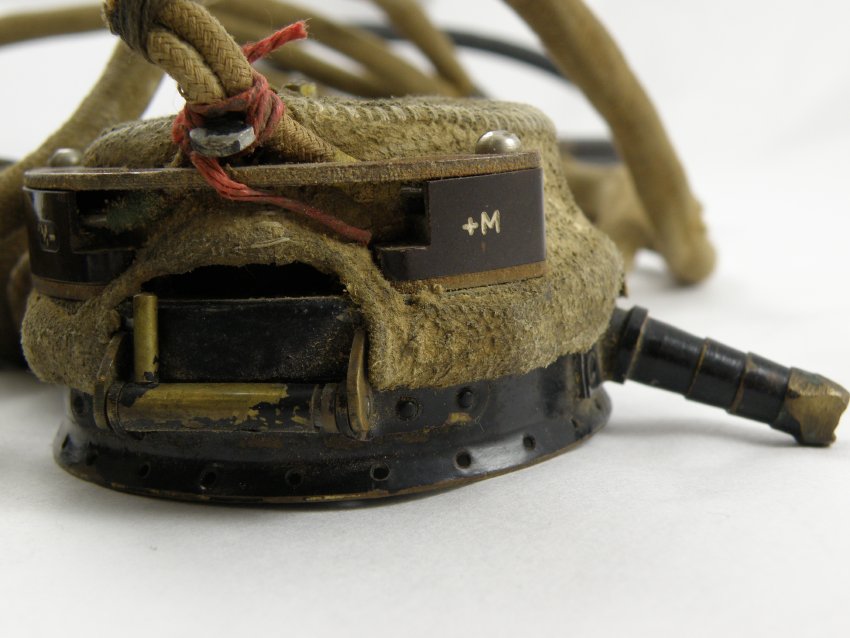
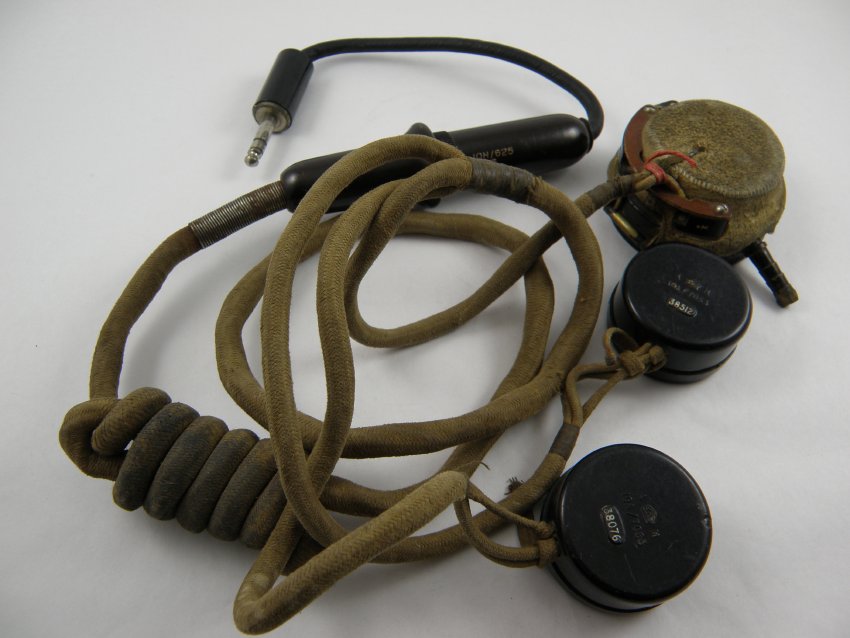
Air ministry Headset, Type 10A/7063 made of black bakelite and stamped in white with the Air Ministry mark. Tri - Connected by insulated braided cloth covered communication cords that join the two earphones with a third cord which, is also attached to what appears to be a chamois covered microphone which may have been part of a component of the D -Type oxygen mask at one time. A protruding inlet stem on the black painted metal ring that is stamped with 6D/117 is all that remains of the mask. At the other end of the communication cord is a black bayonet connector with 10A/10991 stamped on it, and is attached to a brown 10H/625 extension with a black rubber cord which is in turn attached to a black plug with the identifying marks, I.C.A. Made in the U.S.A.
Identifier
984.x.1477
Provenance
D Type oxygen mask The D type mask was introduced in the mid 1930s and remained in service well into WWII. Many different ways of attaching it are known, be it by means of snap fasteners, modified goggle straps or elastic straps. In most cases the mask was attached directly to the flying helmet with four snap fasteners fixed to the mask body. The mask body is constructed of fine green wool on the outside and soft chamois lining on the inside, the latter including a horseshoe shaped padded cushion. Between the two layers there is another thin layer of linen insulation, a cardboard stiffener to help the mask hold its shape and a length of flexible wire to shape the mask for a more secure fit to the wearer's face. When the D type mask was declared obsolete in 1942, some examples still continued to be used as pure microphone carriers in areas where oxygen supply was not necessary. In order to prevent the metal snap fasteners to freeze to the wearer's skin at high altitude, these are fixed on so-called "face-defenders" which could be sewn onto each side of the mask. Although the D type mask was factory issued without provision for communications, it was also designed to carry a microphone on the front. Oxygen (constant flow) was carried through an insulated rubber tube, which is attached to the protruding inlet stem featured on the black painted metal ring of the mask.On the other end of the tube a bayonet connector was to be plugged directly into the aircraft's main oxygen supply.
Abstract
Poor