
Bubble sextant
Item
Title
Bubble sextant
Description
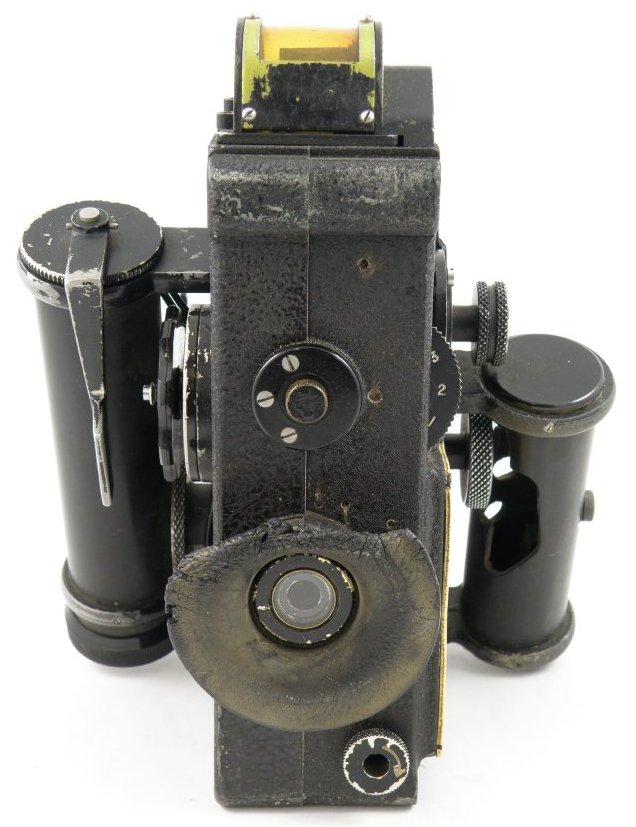
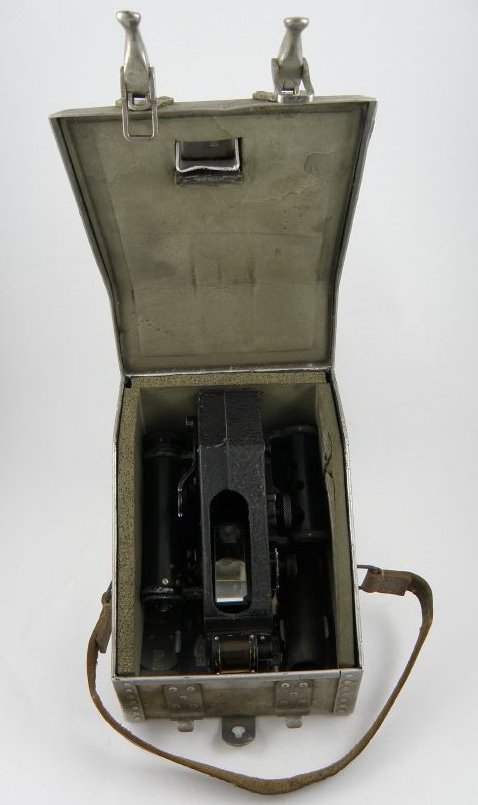
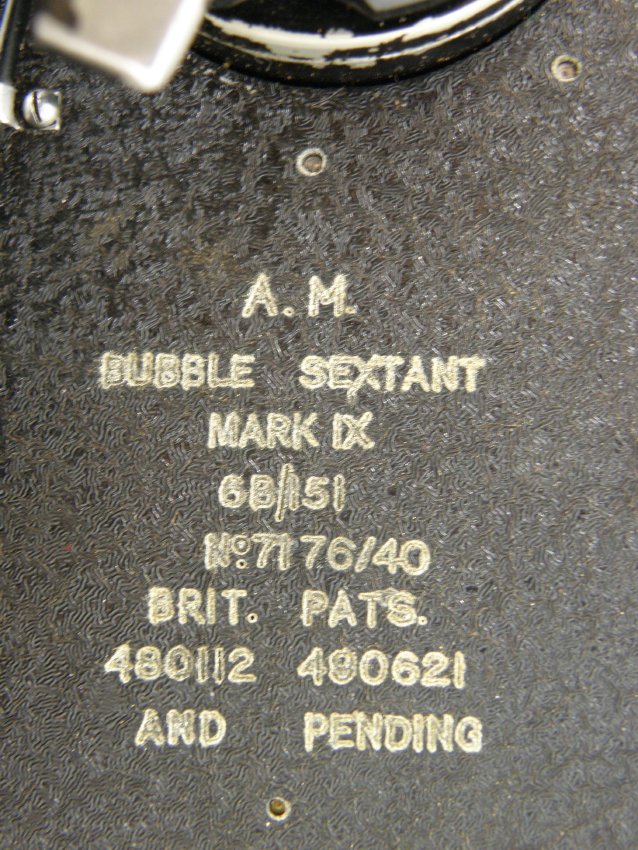
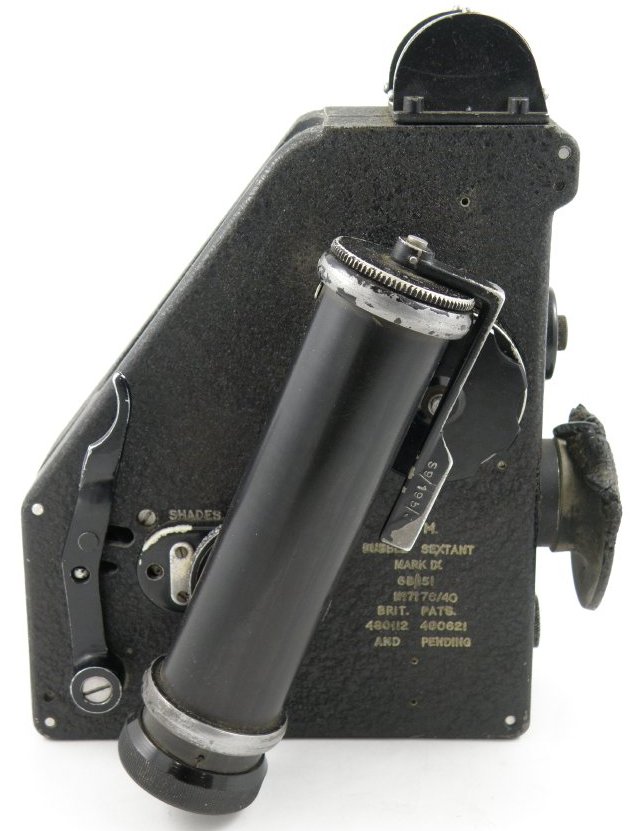
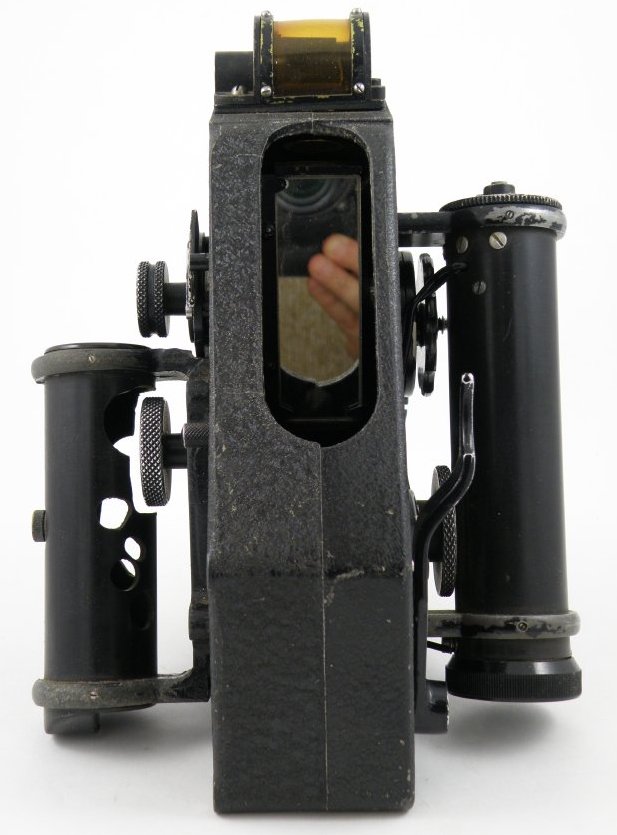
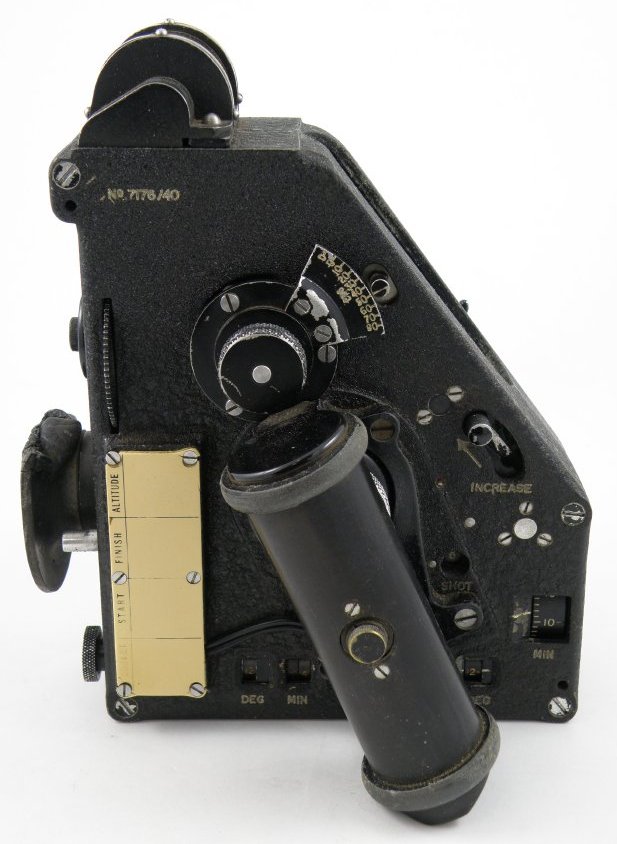
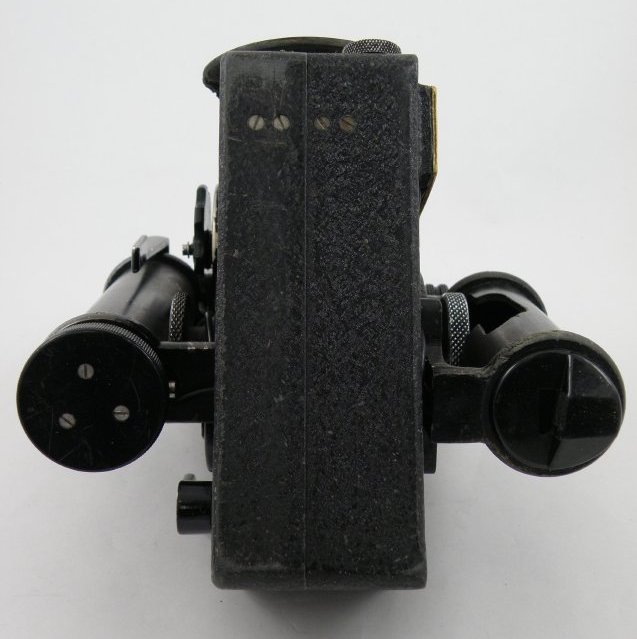
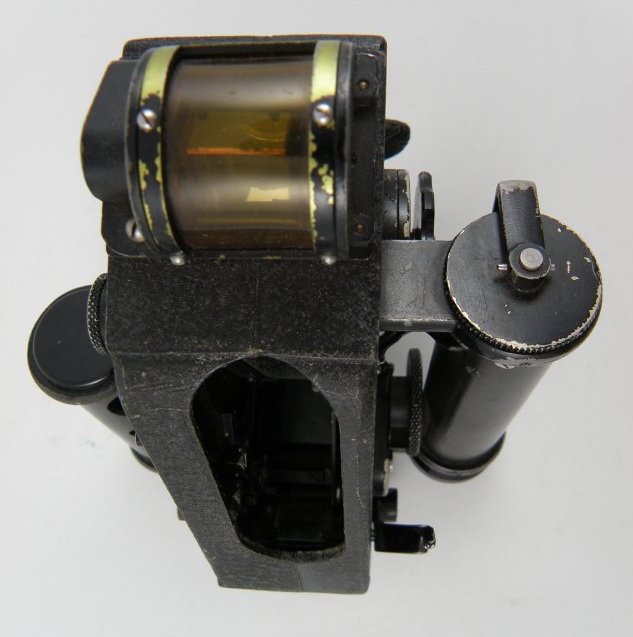
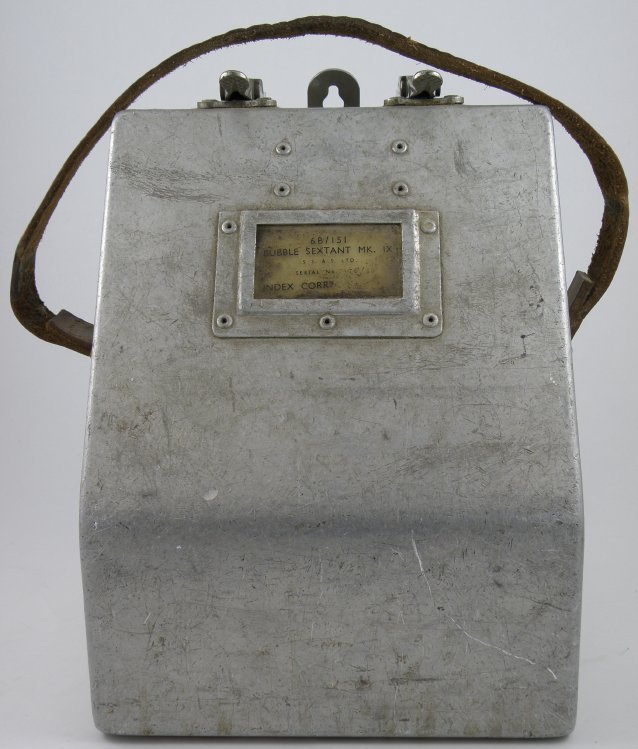
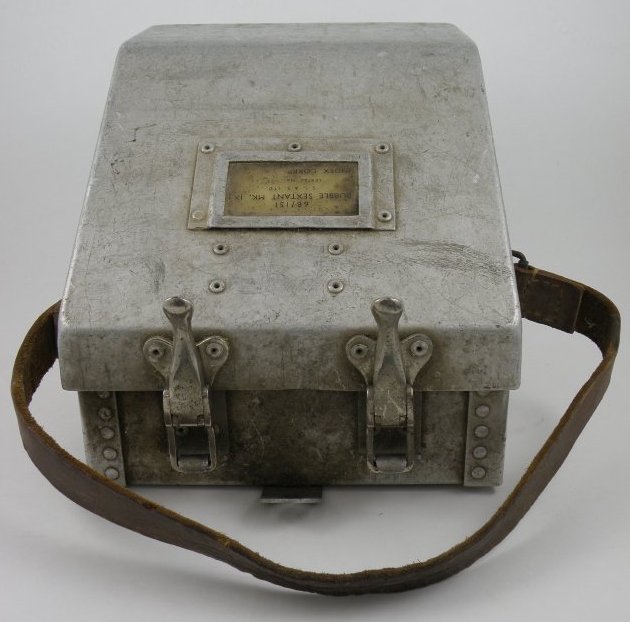
AIR MINISTRY AIRCRAFT BUBBLE SEXTANT, MK. IX, REF. NO. 6B/151 WITH ORIGINAL ALUMINUM STOWAGE CASE. Blackened alloy casing, (Ref. No. 6B/151) first model produced with no clockwork mechanism present. The sextant itself, which was intended to be used aboard aircraft, appears to be in good working order. There are no batteries present in the handle located on the left side of the sextant. The dials and levers appear to be functional . "Serial No. 3731/40" is stamped to the upper edge on the right side. On the lower left side corner, stamped in white, the A.M. crown appears. Beneath which is stamped, "AM BUBBLE SEXTANT MARK IX 6B/151, No. 7176/40 BRIT. PATS. 480112 490621 AND PENDING". The aluminum case seams are rivetted, stands 8 7/8" tall, is 7" wide and has a base depth of 6 3/4" with its cover closed. The top lid is 3 1/4" deep with its cover closed, angling outward until it matches the base depth 3 1/2" above it. Rectangular alloy "rings" are rivetted to either side and sewn to a 1" x 17 1/2" brown leather carrying handle. Rivetted to either edge of its base are two aluminum extensions with stud holes to them. To the top center an identical extension is oriented upwards. These were designed to mate with wall mountings. Rivetted to its top are aluminum flanges which mate with the two brass friction clips rivetted to the upper edge of the cover. The lower edge of the cover is hinged, allowing it to open outward. Fed into a rivetted aluminum window to the cover is a celluloid card with "6B/151," "Bubble Sextant Mk.IX," "S. S. & S. Ltd.," "Serial No. 7176/40," and "Index Corr n." printed on it. The interior is padded along its base, both sides, and the inside of the cover. Two sections of padding are to extensions along the rear interior wall. Two metal bracket clips attached inside on the bottom right side of the care to secure a black plug adapter (not present). Four metal clips on the left side of the case secure a blackened wooden tube, 1 1/4" in diameter and 3 7/8" tall.
Identifier
007.111.001
Provenance
Interest in aeronavigational instruments arose with the demonstration of the military potential of aviation during World War I, and built slowly in the 1920s. The introduction of commercial transoceanic flights in the mid-1930s, together with growing international unrest, led to increased attention to this technology. The military services purchased large numbers of these instruments in the early years of World War II, and again during the Cold War, as did commercial airlines in the post war period.
Abstract
Good
Date Created
1940